
Why Compliance Training is Essential for Brazilian Workplaces
In Brazil, a country with one of the highest rates of workplace accidents globally, safety is not just a regulatory hurdle. It is a strategic imperative. A resilient and ethical business model is built on protecting its most critical asset: its people. Missed opportunities in risk management often stem from viewing safety protocols as a simple checklist rather than a core operational value. This is where compliance training becomes fundamental. It is the formal process of educating employees on Brazil’s specific legal and regulatory standards, particularly the Normas Regulamentadoras (NRs). True workplace safety compliance begins with knowledge. This article will detail the importance of compliance training, outline the benefits of adhering to Brazilian safety regulations, and show how modern training methods can streamline this vital function.
Understanding Brazilian Safety Regulations (NRs)
Many managers mistakenly view Brazil’s Normas Regulamentadoras (NRs) as mere guidelines. They are, in fact, mandatory requirements established by the government to standardise occupational safety and health across the nation. Their legal authority comes directly from the Consolidação das Leis do Trabalho (CLT), and the Ministry of Labour and Employment enforces them. This makes adherence to Brazilian safety regulations entirely non-negotiable. Think of them not as suggestions, but as the foundational rules for operating a business safely and legally in the country.
To understand their scope, consider NR-1. This standard establishes the general provisions and mandates the Occupational Risk Management program (PGR), a framework that applies to all employers, regardless of size or industry. It requires companies to identify, evaluate, and control workplace hazards systematically. Mastering these general provisions is the essential first step, which is why our NR-01 course is so foundational for any business.
The NRs also demonstrate incredible specificity. The training required for an employee handling flammable liquids under NR-20 is vastly different from the safety protocols for a construction site detailed in NR-18. One focuses on chemical hazards and fire prevention, while the other addresses risks like falls from height and structural integrity. This highlights a crucial point: a one-size-fits-all approach to safety training is not only ineffective but also non-compliant. Each function and environment demands a specialised understanding of its unique risks.
The Core Benefits of Effective Compliance Training
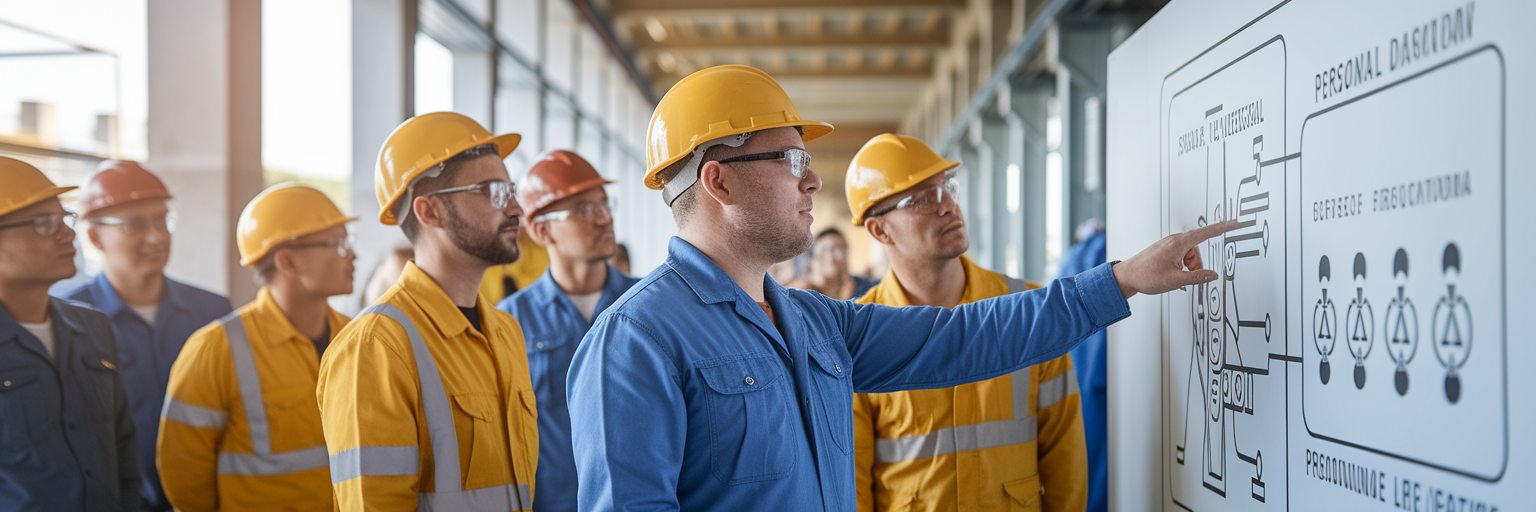
Beyond simply avoiding penalties, a commitment to robust safety education delivers tangible returns that strengthen an organisation from the inside out. The most significant compliance training benefits are felt directly by your team and your bottom line. When employees feel safe and valued, their entire contribution to the business changes. Instead of a culture of fear or apathy, you build one of trust and shared responsibility. These advantages are not abstract concepts; they are measurable outcomes.
Effective training programs yield several key advantages:
- Protection of Human Capital: Proper training directly reduces accidents and occupational diseases. This is not just about numbers. It leads to higher morale, stronger employee retention, and a healthier, more present workforce. When people know their employer is invested in their well-being, they are more engaged and productive.
- Legal and Financial Security: Compliance with NRs shields a company from substantial fines from labour auditors, costly lawsuits, and other legal liabilities. These are not minor expenses; they can cripple a business. A well-documented training program is your first line of defence, demonstrating due diligence and a commitment to legal standards.
- Enhanced Operational Performance: A safe workplace minimises downtime. Every incident, no matter how small, causes interruptions for investigations and team anxiety. Fewer accidents mean uninterrupted productivity. This operational stability also builds a stronger public image, helping you attract top clients and talent who want to partner with responsible companies.
- Adaptation to Modern Workplace Demands: Regulations are also evolving to address new challenges. As noted in a recent analysis by Littler, employers in Brazil are now required to manage psychosocial risks, addressing factors that contribute to workplace stress and mental health. Modern compliance training, such as that for a company’s internal commission for accident prevention, or CIPA, helps create a more supportive and holistic work environment, showing that safety today is about total well-being. This is why our CIPA training is so relevant for proactive businesses.
The Significant Risks of Non-Compliance
While the benefits of compliance are compelling, the consequences of neglect are severe and immediate. Ignoring safety regulations is not a calculated risk; it is a direct path to financial and operational instability. The penalties are designed to be stringent, ensuring that safety remains a top priority for all employers. The first and most obvious risk is financial. Labour inspectors can issue heavy fines that are often applied per employee and per infraction, quickly accumulating into crippling sums. In the event of a serious accident, company directors can even face civil and criminal liability.
Beyond the legal penalties, an incident triggers immediate operational chaos. Work stoppages for formal investigations can halt projects for days or weeks. Team morale plummets as employees lose confidence in their safety, and productivity suffers as a result. The lasting damage, however, is often to the company’s reputation. A business known for safety failures will struggle to attract skilled professionals, lose contracts to more reliable competitors, and see its brand equity erode. The choice between compliance and non-compliance is a choice between stability and chaos.
| Business Area | Outcome with Compliance | Outcome with Non-Compliance |
|---|---|---|
| Financial | Predictable operational costs | Heavy fines, legal fees, increased insurance premiums |
| Operational | Increased productivity, minimal downtime | Work stoppages, lengthy investigations, project delays |
| Human Resources | Higher employee morale and retention | Low morale, difficulty attracting talent, high turnover |
| Reputation | Enhanced brand trust, preferred partner status | Damaged public image, loss of client confidence |
Note: This table contrasts the tangible business outcomes of adhering to Brazilian safety regulations versus neglecting them, illustrating that compliance is a driver of stability and growth, while non-compliance creates significant financial and operational liabilities.
Modernising Safety Education with Online Courses

Understanding the importance of training is one thing; implementing it effectively is another. Traditional classroom sessions often create logistical headaches, especially for companies with shift workers or teams spread across different regions of Brazil. This is where online safety training offers a practical and powerful solution. It shifts the focus from logistical coordination to effective learning, making compliance more accessible than ever before.
The advantages of a digital approach are clear and directly address common administrative burdens:
- Flexibility and Accessibility: Online platforms allow employees to complete courses 24/7 from any location with an internet connection. This empowers them to fit training around their work schedules, not the other way around. It ensures that everyone, from the factory floor to the remote office, receives the necessary instruction without disrupting operations.
- Standardisation and Consistency: With digital courses, you guarantee that every employee receives the exact same certified information. The content can be updated instantly across the board to reflect changes in NRs, ensuring company-wide consistency and eliminating the risk of outdated materials being used in different locations.
- Simplified Administration: As we explain in our e-learning model, online portals automate the most tedious parts of compliance management. They track employee progress, manage certificates, and generate reports on demand. This drastically reduces the administrative workload for HR and safety managers, ensuring the company is always audit-ready.
- Improved Engagement and Retention: Let’s be honest, long lectures can be ineffective. As confirmed by platforms like Grupo PLBrasil, interactive elements such as videos, simulations, and quizzes make learning more dynamic. This active participation leads to better knowledge retention, ensuring that safety lessons are not just heard but remembered and applied.
Building a Proactive and Enduring Safety Culture
Ultimately, compliance training is more than a legal obligation in Brazil. It is a source of significant business benefits and a process made far more efficient with modern online solutions. The true compliance training importance lies in its ability to serve as the first step toward embedding safety into your company’s core values. The goal is to move beyond a reactive, check-the-box mentality and build a proactive culture where every employee feels responsible for their safety and the safety of their colleagues.
A proactive safety culture is what separates good companies from great ones. We urge Brazilian business leaders to view safety training not as a cost, but as a continuous and strategic investment in their people, their operational resilience, and their long-term success. It is the foundation upon which a strong, stable, and respected business is built. To begin strengthening your safety culture, we invite you to explore the certified training solutions available on our website.